Client

Deutsche Telekom AG

Innovating Pet Safety by Crafting a Dog Tracking App based on IOT

UX Research

UX Design

User Testing

UX Management

In cooperation with denkwerk GmbH

June - August 2023

01 / 09

The opportunity

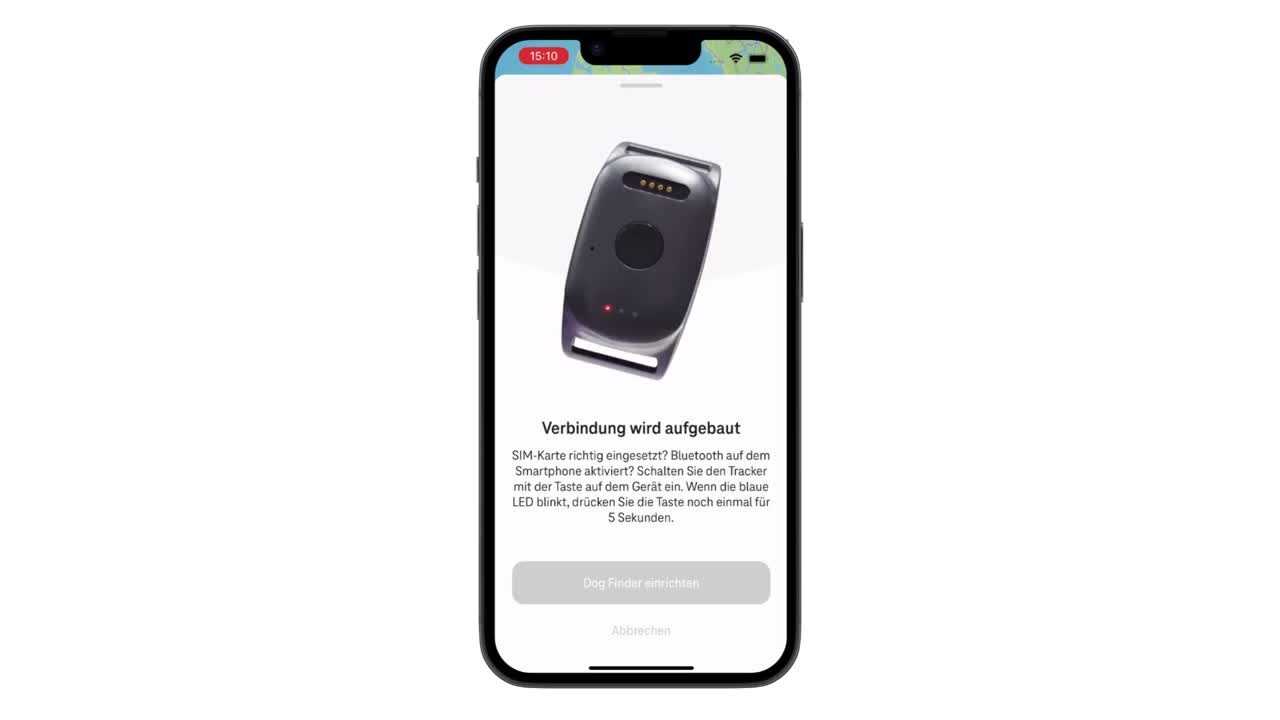
The client, Deutsche Telekom AG, sought to innovate in the pet care industry by developing a GPS tracker for dogs. This device, attached to the dog’s collar and connected to a phone via Bluetooth, provides a crucial security measure for dog owners, allowing them to track their pets in case they get lost. As the UX lead, I was responsible for overseeing the entire UX design process, ensuring the product met user needs effectively. This involved not only extensive user research but also tackling complex UX challenges. The app's main features include a map to locate the dog, playful data visualizations about the dog's activity, geofence functionalities, as well as intuitive onboarding and pairing features. Starting from scratch, our goal was to create a seamless, user-friendly experience that integrated these features cohesively.
02 / 09

Benchmarking

We began the project with thorough benchmarking to understand the competitive landscape and existing solutions in the market. By analyzing similar products, we identified gaps and opportunities for innovation. This step provided valuable insights into features, usability, and design patterns that informed our initial concepts and set the stage for a user-centric design approach.

03 / 09

User Interviews

Conducting user interviews was a critical part of our initial discovery phase to gather in-depth insights into the needs, behaviors, and pain points of dog owners. We spoke with a diverse group of users to understand their experiences with pet tracking, their concerns about their dog's safety, and their expectations from a tracking device and connected app. These interviews helped us empathize with our users and shape the product’s features and design to better align with their needs. The result, after analyzing these interviews, was a precise role profile of our target group of dog owners, including their pains, goals and needs.

04 / 09

User Journey Workshop

The user journey workshop allowed us to map out the complete experience of our target group of dog owners, using the dog tracker app from initial setup to locating a lost dog. Collaborating with stakeholders and team members, we identified key touchpoints and potential pain points in the user journey. This workshop was instrumental in ideating first concepts and ideas for potential optimization along the user journey..

05 / 09

Requirement Analysis

Based on the findings from benchmarking, user interviews, and the user journey workshop, we compiled a comprehensive requirement list. This list included both functional and non-functional requirements that the app needed to fulfill. Prioritizing these requirements helped us focus on delivering the most impactful features and addressing critical user needs effectively.

06 / 09

App Concept

In the conception phase, we translated our research and requirements into initial design concepts. This iterative process involved sketching, prototyping, and constant feedback loops with stakeholders and users. Our goal was to create a design that was not only functional and aesthetically pleasing but also intuitive and user-friendly. The main features of the app include a map to locate the dog, playful data visualizations about the dog's activity, geofence features, as well as intuitive onboarding and pairing features. By integrating these features cohesively, we aimed to provide a comprehensive and engaging user experience that addressed the core needs of dog owners.

07 / 09

User Testing

User testing was conducted to validate our design assumptions and ensure the app’s usability. We organized sessions where real users interacted with the prototype, providing feedback on their experience. This iterative testing phase allowed us to identify and rectify usability issues, refine the design, and enhance overall user satisfaction.

08 / 09

Testing Analysis

The insights gathered from the user testing sessions were analyzed using Dovetail, a powerful tool for qualitative data analysis. Dovetail allowed us to efficiently tag, categorize, and synthesize user feedback, revealing key patterns and themes. This analysis highlighted areas for improvement and confirmed the effectiveness of certain features, guiding our iterative design process to better meet user needs.

09 / 09

Final Design

The project culminated in a high-fidelity prototype that served as a basis for development. This prototype incorporated all the insights and improvements from user testing, ensuring a polished and user-centered design. Following the design phase, I also supported the development team with quality assurance to ensure the final product met our high standards and user expectations.

01

What surprised me

The research analysis in Dovetail allowed us to conduct thorough and deep analysis, enabling us to uncover insights on a high level. This tool significantly enhanced our ability to synthesize user feedback and identify key patterns efficiently.

02

What challenged me

Limitations in resources on the development side often resulted in extra discussions to find compromises between efficient yet user-centered design. Balancing these constraints while maintaining a high standard of UX was a continuous challenge.

03

What I would do different

Due to restrictions from the client, we had to use tools other than Figma for the design and documentation. This resulted in increased effort for the design process and especially the documentation. In future projects, I would advocate more strongly for the use Figma to streamline workflows.

04

What I am proud of

Leading this project from a UX perspective and supervising multiple junior to mid-level designers on the team. Successfully guiding the team through the complexities of the project and delivering a high-fidelity prototype that met the client’s expectations was a significant achievement.

Takeaways

Here's what I learned.

Next

//

Next

//

Next

//

Next

Quantus Informatics | IOT

Visual Design

Design Systems

Web

App

Creating a Visual Design Route and Design System for an IOT based access control platform and app

PrepLounge GmbH | Consulting

Branding

Design Systems

UX Design

Branding and Optimizing UX of a Consulting Community Platform

Next

//

Next

//

Next

//

Next

//

Next

//

Next

//

Next

Next

//

Next

//

Next

//